
What Do Liposuction Surgery Before and After Photos Show?
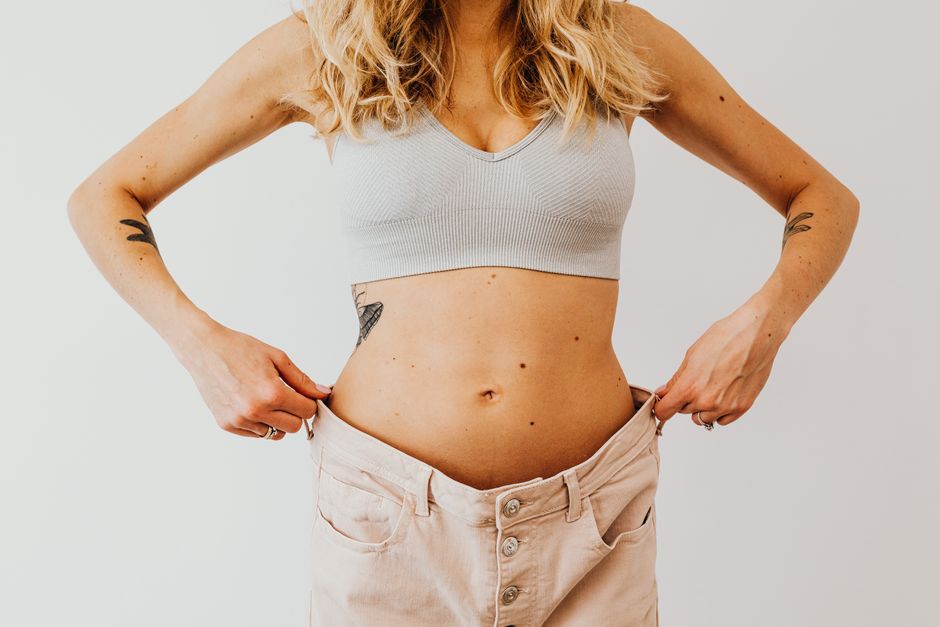
Liposuction surgery before and after photos show changes in localized fat and body contour, but they are useful only when you account for swelling, skin quality, abdominal muscle separation, and how the images were taken. Photos from the first week capture recovery, not a final result; swelling can take several months to settle, so compare images taken at similar stages and under similar conditions.
What does a belly look like after liposuction?
After liposuction, a belly may look more contoured where localized fat was removed, but it will not necessarily look flat or smooth. The result depends on more than the amount of fat beneath the skin: skin quality, abdominal muscle tightness, and protruding fat all matter.
The American Society of Plastic Surgeons explains that liposuction targets localized abdominal fat but does not correct excess skin or lax abdominal muscles. A protruding abdomen can also involve diastasis recti, the separation of abdominal muscles, which liposuction does not repair. A photo showing a persistent bulge therefore does not, by itself, establish that fat removal failed; the cause of the contour matters.
That distinction also sets a realistic expectation for liposuction without a tummy tuck. Liposuction may reduce a localized fat deposit, while a tummy tuck may address loose skin and separated muscles. The procedures address different features, so the right comparison is between the person’s starting anatomy and the change the procedure is designed to make—not between a result and an idealized flat-stomach image.
The ASPS describes liposuction as a contouring procedure, not a weight-loss procedure. When reviewing examples, check whether the treated areas match your concern; an abdomen-and-flank result is not a direct comparison for someone considering treatment of a different area. For another example of reading procedure-specific images, see How Should You Read Plus Size Lipo 360 Before and After Pictures?
How soon after liposuction can I see a difference in before-and-after photos?
You may see a difference in the early recovery period, but a photo taken one week after surgery is not a reliable view of the final contour. Swelling and bruising are common then, and swelling can obscure the shape that becomes more apparent as recovery progresses.
The American Society of Plastic Surgeons’ recovery guidance describes week one as a period to monitor pain, swelling, and bruising. During weeks two and three, many patients feel better; by weeks four and five, bruising should generally be gone and swelling should start to subside. From week six onward swelling can continue to improve, and the ASPS says it may take several months to fully dissipate.
This timeline explains why photo dates matter as much as the images themselves. A one-week after photo compared with a later-stage before-and-after pair can make a developing result look worse or better than it is. In an ASPS case, the after images are labeled as three months post-operation, and the case also specifies stable weight and comparison conditions—details that make the images easier to interpret.
| Time after surgery | What a photo may show | How to interpret it |
|---|---|---|
| Week one | Swelling and bruising during early recovery | An early snapshot, not a final contour |
| Weeks two to three | Many patients feel better, though recovery is ongoing | Use the date and recovery context; do not assume swelling has resolved |
| Weeks four to five | Bruising should generally be gone and swelling should start to subside | Contour may be becoming easier to assess |
| Week six onward; several months | Swelling continues to improve and may take several months to fully dissipate | Later images provide more context, but follow the surgeon’s assessment |
These are general milestones, not a personal recovery forecast. Follow the operating surgeon’s individualized aftercare instructions and follow-up schedule rather than using a gallery to diagnose your own progress.
Why can my stomach look more swollen after liposuction than before?
Your stomach can look more swollen after liposuction because swelling and fluid retention are part of the recovery period. The ASPS notes that contours become apparent as swelling and fluid retention subside, and that swelling may take several months to fully dissipate.
That makes the before-and-after label incomplete without a date. A post-operative image taken while swelling is prominent answers “what did this area look like at that stage of recovery?” It does not answer “what will the final contour be?” Comparing a recent image with a pre-surgery photo can still document recovery, but it should not be treated as a settled outcome.
Temporary swelling or firmness should be interpreted in the context of your own procedure and recovery instructions. If a change concerns you, or you are unsure whether it fits your recovery, contact the operating surgeon and attend the recommended follow-ups. The surgeon can assess your specific situation; a public photo gallery cannot distinguish expected healing from an individual complication.
There is also a separate long-term question: how contour changes with weight over time. A small randomized study by Hernandez and colleagues followed 32 nonobese women after small-volume liposuction or as controls, with measurements at six weeks, six months, and one year. Its findings included abdominal fat reaccumulation at one year in the liposuction group, but the study applies to that specific population and procedure; it should not be used to predict every person’s result.
What should I compare in liposuction photos to judge the result fairly?
To judge liposuction photos fairly, compare like with like: the same body area, similar posture and camera angle, similar lighting, and a clearly stated time since surgery. These details help separate a change in contour from a change in presentation.
- Treated areas: Confirm which areas were treated. Photos are not comparable if one includes flank treatment and the other does not.
- Posture: Look for a similar stance and body position. A change in posture can alter how the abdomen appears.
- Camera angle: Compare images taken from similar angles and distances, not just images with similar labels.
- Lighting: Consistent lighting makes shadows and contour easier to compare.
- Time since surgery: Record the date or recovery interval for every after photo. Early swelling and later healing are different stages.
- Weight context: Check whether weight was stable or changed between images; weight affects the context for interpreting contour.
The ASPS’s Case 50578 illustrates why these details help: it identifies abdomen and flank liposuction, gives the after-photo timing as three months post-operation, reports stable weight, and describes consistent angle and lighting. That is useful context, not proof that another person should expect the same result. Individual anatomy, treated areas, and recovery all shape what a photo can show.
One more comparison limit is worth keeping in view: a photo records appearance, not the precise tissue changes beneath the skin or the cause of every bulge. The Cleveland Clinic Journal of Medicine describes liposuction as removal of adipose tissue from the subcutaneous space to shape body contour and identifies contour deformity as the most common complication discussed in its review. If you are concerned about an uneven or unexpected result, use the images to describe the concern to your surgeon rather than to reach a diagnosis from the photograph alone.
Frequently Asked Questions
Can liposuction flatten my stomach without a tummy tuck?
Liposuction can reduce localized fat, but it does not remove excess skin or repair lax or separated abdominal muscles. Whether it can achieve the contour you want depends on those factors as well as the amount and location of fat.
How long does swelling affect liposuction before-and-after results?
Swelling is common in the first week, and it can continue to improve from week six onward. The American Society of Plastic Surgeons says it may take several months to fully dissipate, so early photos may not show the final contour.
What happens to liposuction results if I gain weight years later?
Weight gain can still occur after liposuction, and the body’s contour may change. The American Society of Plastic Surgeons describes results as long-lasting when weight and general fitness remain stable; the available small study also found fat redistribution over time in its specific group of participants.
Sources
- American Society of Plastic Surgeons — Liposuction Recovery
- American Society of Plastic Surgeons — Liposuction Results
- American Society of Plastic Surgeons — What Is the Best Abdominal Procedure for Your Goals?
- American Society of Plastic Surgeons — Liposuction Before and After Photos, Case 50578
- Hernandez et al., Obesity — Fat Redistribution Following Suction Lipectomy: Defense of Body Fat and Patterns of Restoration
- Cleveland Clinic Journal of Medicine — Liposuction: Concepts, Safety, and Techniques in Body-Contouring Surgery
Related reading
How Should You Read Plus Size Lipo 360 Before and After Pictures?
Plus size Lipo 360 photos show contour changes, not guaranteed results; compare matched views and disclosed procedures.
How Can I Get a Lower Cruise Price After Booking?
Learn how cruise price protection, promotions, fare monitoring, refunds, credits, and upgrades can work after you book.

Why Does My House Still Smell Like Dog After Cleaning?
A source-first plan for removing persistent dog odor from bedding, carpet, upholstery, and indoor air, plus signs your dog needs veterinary care.
What Documents Do I Need for an International Cruise in 2026?
Verify visas, transit authorizations, and passport rules for every cruise border crossing in 2026.