
How Do I Become an MRI Technologist and Choose the Right Program?
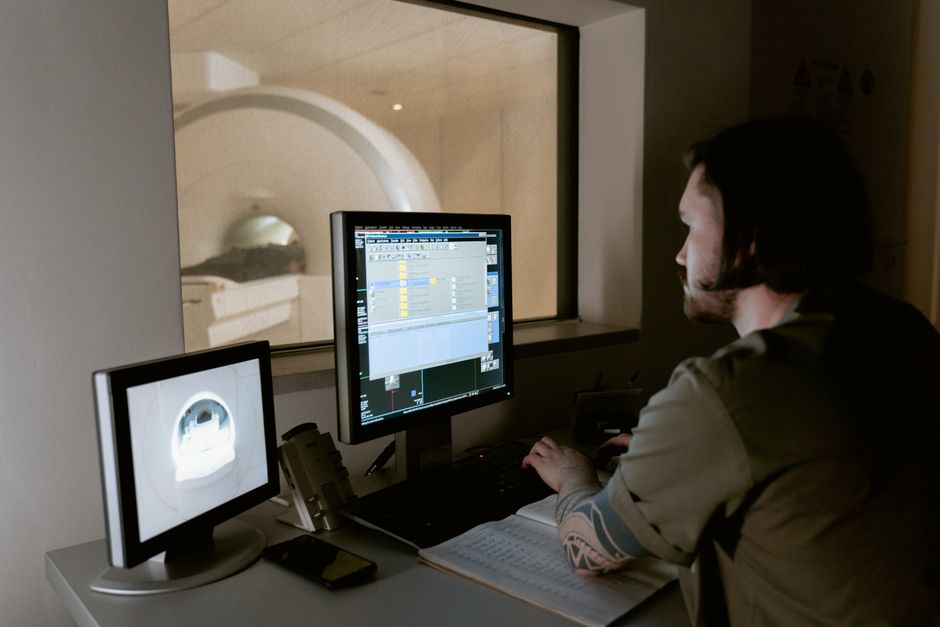
You can become an MRI technologist through ARRT’s primary MRI pathway without first becoming an X-ray technologist, or through its post-primary route if you already hold a qualifying imaging credential. The correct local program depends on that starting point: verify its accreditation, clinical-setting arrangements, admissions prerequisites, total tuition, and the eligibility route its completion supports before you apply.
The apparent contradiction in MRI education is simple: a school can call itself an MRI program while preparing students for very different professional starting lines. ARRT permits MRI through both primary and post-primary eligibility pathways. The label on the brochure is therefore less useful than the question beneath it: are you earning your first credential, or adding MRI to one you already hold?
Can I become an MRI technologist without first becoming an X-ray technologist?
Yes. ARRT offers MRI through a primary pathway, which means radiography certification is not a prerequisite for that route. The ARRT primary education requirements require an associate degree or higher from an institution accredited by an ARRT-recognized agency, plus completion of an ARRT-approved educational program in MRI.
The degree does not have to be in radiologic sciences, and it can be earned before or after the MRI educational program. It must, however, be completed before the ARRT examination. The MRI program itself must include both didactic coursework and clinical-procedure competencies. This is the distinction that prevents a shortcut: an academic degree and discipline-specific MRI education are separate requirements, not substitutes for each other.
ARRT gives primary-pathway candidates three years after completing their educational program to establish eligibility and apply for certification and registration. The Bureau of Labor Statistics describes an associate degree as the typical entry-level education for radiologic and MRI technologists and notes that MRI technologists may begin as radiologic technologists. “May” matters here: it describes a common career sequence, not a universal entrance rule.
What is the difference between a primary-pathway and post-primary MRI program?
A primary-pathway MRI program prepares a person for an initial MRI credential, while a post-primary program adds MRI to an existing qualifying imaging credential.
| Question | Primary MRI pathway | Post-primary MRI pathway |
|---|---|---|
| Who it serves | People seeking an initial ARRT MRI credential | Credentialed imagers adding MRI |
| Core educational requirement | Associate degree or higher plus an ARRT-approved MRI program | Qualifying supporting credential, structured education, and clinical experience |
| Prior imaging credential | Not required by ARRT for MRI | Required |
| Associate-degree rule | Applies before the ARRT examination | Does not apply to post-primary candidates |
| Additional documented study | Program didactic and clinical competencies | 16 hours of structured education activities |
According to ARRT’s post-primary MRI guidance, the supporting credential must be in Radiography, Nuclear Medicine Technology, Radiation Therapy, or Sonography. Nuclear Medicine Technology may be credentialed through ARRT or NMTCB; Sonography may be credentialed through ARRT or ARDMS. Post-primary candidates also must meet ethics, structured-education, clinical-experience, and examination requirements.
The post-primary route is not a shorter version of primary education. It is a different evidence model: ARRT accepts established competence in a related imaging discipline, then requires MRI-specific education and clinical documentation. Its post-primary education requirements specify 16 hours of structured education activities. A prospective student without the supporting credential should treat a post-primary certificate as the wrong route, even if it looks faster.
Which prerequisites do MRI technician programs require?
MRI program prerequisites vary substantially by school, so ARRT eligibility rules should be treated as the floor rather than a school’s admissions checklist.
Mayo Clinic College of Medicine and Science makes the point concrete. Its MRI application requirements include a minimum cumulative GPA of 2.85 on a 4.0 scale, at least three hours of MRI-department job shadowing, and coursework in English composition, algebra, two lab-based anatomy and physiology semesters, lab-based physics, speech or interpersonal communication, lab-based chemistry, and ethics or medical ethics, with a C or higher. Degree-seeking applicants face additional selection criteria, including direct hands-on patient-care experience, a 3.0 GPA, B-or-higher STEM grades, and specified math and science coursework completed within five years.
These are not universal thresholds. They are evidence of why applicants should not generalize from a national credentialing rule to a local admission decision. The efficient approach is to build a program-by-program comparison before paying an application fee.
How to compare programs near you
Start with JRCERT’s student accreditation resources. JRCERT says its accredited-program details include general information, tuition, terminal award, accreditation status, and program effectiveness data, including annually reported credentialing-exam pass, job-placement, and completion rates. That turns a vague local search into a comparable set of records.
- First, identify whether each program is designed for primary-pathway students or credentialed post-primary applicants.
- Next, confirm the program’s accreditation status and examine the terminal award, tuition, and published effectiveness data.
- Then, ask for the current list of clinical settings and how placement works. JRCERT MRI standards require every clinical setting to be recognized before student assignment and require a 1:1 student-to-magnet ratio except during temporary assignment for infrequent procedures.
- Finally, obtain the school’s written prerequisites, observation rules, patient-care expectations, GPA standards, deadlines, and statement of ARRT exam eligibility.
Clinical training is not a decorative line in this comparison. Mayo Clinic describes its one-year program as providing 900 clinical hours alongside lectures and laboratory work, and says students begin working with patients after six weeks. Its published application window runs from December 15 through January 15, with the program beginning in late May or early June. Local programs can use different schedules, but the example shows why the application calendar belongs in the first round of research, not the last.
One useful test remains: can the program explain, in writing, which ARRT pathway it supports and exactly what you must already have completed? If the answer is vague, the cost comparison is premature. For a separate example of how imaging connects to consumer health decisions, see Should I Choose Active Surveillance or Treatment for Low-Risk Prostate Cancer?; professional MRI training, by contrast, demands a documented education-and-clinical pathway.
The decision rule is blunt. Start with your present credential status, then evaluate nearby programs against the route it permits. Accreditation, recognized clinical settings, admissions rules, and examination eligibility are not separate shopping criteria; together, they determine whether the program can carry you from enrollment to a credential.
Frequently Asked Questions
How do I find accredited MRI programs and clinical placements near me?
Start with JRCERT’s Find a Program tool, then open each program detail page to compare its accreditation status, terminal award, tuition, and reported effectiveness data. Ask the program which clinical settings it uses and whether those settings are recognized by JRCERT before students are assigned; JRCERT standards require recognition before assignment.
Do I need patient-care experience or MRI job shadowing before applying?
Requirements differ by school rather than following one universal admissions rule. Mayo Clinic’s MRI program, for example, requires at least three hours of MRI-department job shadowing, and its degree-seeking selection criteria include direct hands-on patient-care experience. Treat those items as program-specific requirements to verify locally, not as ARRT-wide rules.
Can I sit for the ARRT MRI exam after a certificate program?
A certificate alone is not enough to establish primary-pathway eligibility. ARRT requires completion of an approved MRI program and an associate degree or higher before the exam, although the degree need not be in radiologic sciences and may be earned before or after the MRI program. Mayo Clinic states that graduates of its one-year certificate program are eligible for the ARRT MRI certification examination, illustrating how a certificate program can fit within the applicable eligibility requirements.
Sources
- American Registry of Radiologic Technologists: Primary Education Requirements
- American Registry of Radiologic Technologists: Postprimary Magnetic Resonance Imaging
- American Registry of Radiologic Technologists: Postprimary Education Requirements
- Joint Review Committee on Education in Radiologic Technology: Accreditation for Students
- JRCERT: Magnetic Resonance Standards
- Mayo Clinic College of Medicine and Science: MRI Program Application Requirements
- Mayo Clinic College of Medicine and Science: MRI Program
- U.S. Bureau of Labor Statistics: Radiologic and MRI Technologists