
Best Family Friendly Beaches in Florida: Choose Your Coast
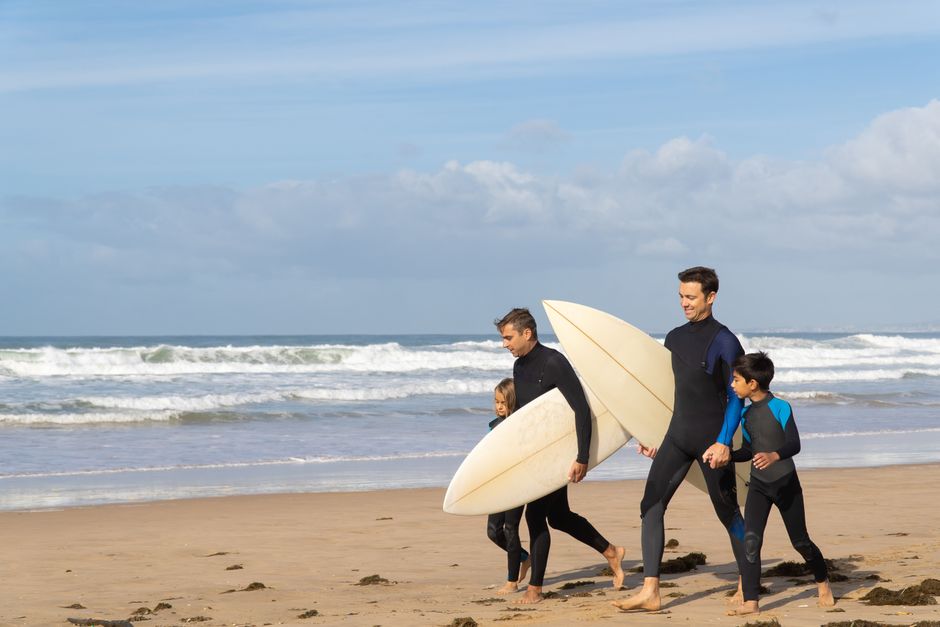
The best family friendly beaches in Florida depend on swimming conditions, access, and what children want to do: Gulf beaches generally have calmer water suited to young children, while Atlantic beaches tend to have more waves. Siesta Beach stands out for parking, lifeguards, and amenities; Destin offers several facility-rich parks; and Daytona combines lifeguards with nearby attractions and access from Orlando.
What part of Florida has the best beaches for families?
Florida’s Gulf Coast is often the better starting point for families prioritizing calmer swimming, while the Atlantic Coast can suit children seeking more waves and activity. VISIT FLORIDA describes Gulf beaches as generally having white sand and calmer water, and Atlantic beaches as tending to offer more waves. These are broad patterns, not a promise about conditions at a specific beach on a specific day.
For a facilities-first Gulf option, Siesta Beach has more than 950 free parking spaces, lifeguards seven days a week from 10 a.m. to 5 p.m., restrooms, concessions, and a shaded playground, according to Sarasota County Parks and Recreation. Families can also use shelters, grills, volleyball courts, tennis and pickleball courts, and a paved trail. The county says beach wheelchairs are available at no cost year-round and an access mat extends 454 feet toward the Gulf.
For nature-focused plans, VISIT FLORIDA points to Canaveral National Seashore as an option near the Atlantic coast. The source does not provide parking or facility details for that destination, so confirm those directly before building a day around it. For a broader shortlist beyond this family comparison, see What Are the Best Beaches to Visit in Florida?
Is Destin or Daytona Beach better for a family vacation?
Destin is the stronger fit when your family wants a choice of parks with amenities; Daytona is a practical fit for lifeguarded beach access and nearby attractions. Neither is a universal winner: the right choice turns on whether your priority is Gulf-side conditions and park facilities, or Atlantic waves and activities.
The City of Destin lists more than 70 parking spaces, showers, and restrooms at June White Decker Beach Park. James Lee Park has a playground, restrooms with changing rooms, showers, picnic areas, and more than 100 parking spaces. Henderson Beach State Park has more than a mile of beach and over 300 parking spaces, but daily admission fees apply. Norriego Point has 27 spaces and restrooms. The city directs beachgoers to current beach flags and local safety resources.
Daytona has 26 pedestrian and/or vehicle access points within five miles, and trained lifeguards are posted along the beach, according to the City of Daytona Beach. Lifeguard stands display water temperature, tide times, and surf conditions. VISIT FLORIDA lists Daytona at an estimated 58 minutes and 53.81 miles from Orlando, and notes the pier and attractions as nearby draws. Daytona’s pedestrian and bicycle access is free and available 24 hours a day, subject to tides and weather; vehicle access and parking hours are restricted. Driving is limited to designated areas and subject to weather and tides.
Which is better for kids, Siesta Key or Anna Maria Island?
Among these two, the available facts support a more specific recommendation for Siesta Beach: it has documented parking, lifeguard hours, and family facilities. The supplied research does not include comparable official details for Anna Maria Island, so a source-backed head-to-head verdict on its parking, lifeguards, or amenities is not possible.
For younger children, Siesta Beach’s lifeguard coverage and shaded playground are concrete advantages to weigh alongside its free parking and restrooms. For families with older children, the courts, grills, and paved trail add options beyond swimming. The beach wheelchair and access mat also make beach access more practical for some visitors.
Do not treat a Gulf location as a guarantee of calm water. VISIT FLORIDA says clarity can vary with rainfall, wind, currents, sunlight, and surf, so conditions can change day to day. Compare current local conditions and the facilities you need before choosing between destinations.
What are the top three beaches in Florida for families?
For a practical shortlist based on the available evidence, consider Siesta Beach for its extensive facilities, Destin’s James Lee Park for its playground and family amenities, and Daytona Beach for lifeguard-posted access and nearby attractions. This is a needs-based shortlist, not a statewide ranking: the sources do not provide comparable crowd or water-condition measurements for every beach.
The comparison below highlights what the published information supports. A blank in the evidence is marked “not published,” rather than filled with an estimate.
| Option | Who it suits | Swimming and safety | Facilities and parking | Cost and key limitation |
|---|---|---|---|---|
| Siesta Beach | Families seeking facilities and access features; young children with adult supervision | Lifeguards seven days a week, 10 a.m.–5 p.m.; Gulf conditions can be calmer generally, but vary | More than 950 free spaces; restrooms, concessions, shaded playground, shelters, courts, trail | Parking is free; admission fee not published. Crowd level not published. |
| Destin: James Lee Park | Families wanting a playground, changing rooms, showers, and picnic areas | Current conditions and lifeguard coverage: check city information | More than 100 parking spaces; restrooms with changing rooms, showers, playground, picnic areas | Fee not published. Crowd level not published. |
| Henderson Beach State Park, Destin | Families wanting more than a mile of beach and substantial parking | Current conditions and lifeguard coverage: check park information | Over 300 parking spaces | Daily admission fees apply; amount not published. |
| Daytona Beach | Families interested in lifeguarded access and nearby attractions; Orlando-area visitors | Trained lifeguards posted; stands display tide and surf information | 26 access points within five miles; vehicle parking hours restricted | Pedestrian and bicycle access is free; vehicle access conditions vary. Crowd level not published. |
| Cocoa Beach | Families seeking a beach near Orlando with a pier and watersports | Atlantic beaches tend to have more waves; conditions vary | Parking and facility details not published in the provided sources | Fees not published; estimated travel from Orlando is about 1 hour 9 minutes and 59.57 miles. |
How can families make a safer beach-day decision?
Make safety checks part of choosing the beach, not a last-minute reaction. Florida’s Department of Environmental Protection explains that warning flags give general information about surf conditions, but do not specifically indicate whether rip currents are present. Read local safety guidance and check rip-current information separately.
- Check before leaving. NOAA’s National Hurricane Center advises checking weather and the National Weather Service rip-current forecast.
- Choose a lifeguarded area. Confirm lifeguards are present and set up near a stand. Daytona’s official guidance says to swim directly in front of a lifeguard.
- Watch conditions as they change. Check flags and posted surf information, and reassess if weather or water conditions shift.
- Keep supervision active. NOAA advises staying near lifeguards, never swimming alone, and keeping attention on family members and friends. It also recommends bringing a U.S. Coast Guard-approved life jacket for flotation.
For toddlers, that means choosing conditions and facilities that make close supervision workable, while recognizing that no coast label replaces a day-of check. NOAA’s clear rule is: “When in doubt, don't go out; it's always better to swim another day when conditions are safer!”
Frequently Asked Questions
Which Florida beaches have the calmest water for toddlers?
Gulf beaches generally have calmer water than Atlantic beaches, according to VISIT FLORIDA, so they may suit toddlers and cautious swimmers. Conditions still change with rainfall, wind, currents, sunlight, and surf; check local information before entering the water.
Where can we find family-friendly beaches near Orlando?
VISIT FLORIDA lists Daytona Beach at an estimated 58 minutes and 53.81 miles from Orlando, and Cocoa Beach at about 1 hour 9 minutes and 59.57 miles. Daytona offers a pier and attractions, while Cocoa Beach is associated with a pier and watersports; travel times are estimates, not guarantees.
Which beaches have lifeguards, restrooms, and easy parking?
Siesta Beach has lifeguards seven days a week from 10 a.m. to 5 p.m., restrooms, and more than 950 free parking spaces, according to Sarasota County Parks and Recreation. Daytona posts trained lifeguards along the beach, while Destin’s James Lee Park has restrooms and more than 100 parking spaces; check each location’s current information before departure.
When should families arrive to avoid crowds and full beach parking lots?
The provided sources do not publish a best arrival time or crowd forecast. Since parking capacity differs by beach, check the destination’s official parking and access information before leaving, and have a second beach option ready if the preferred lot is full.
Sources
- Sarasota County Parks and Recreation — Siesta Beach
- City of Destin — Beach Information
- City of Daytona Beach — Beach Information
- VISIT FLORIDA — Most Frequently Asked Questions about Florida Beaches
- Florida Department of Environmental Protection — Beach Warning Flag Program
- National Oceanic and Atmospheric Administration, National Hurricane Center — Safe Swimming
Disclaimer: This article is for general information only and is not medical advice. It is not a substitute for diagnosis or treatment by a qualified healthcare professional. Always speak to your doctor before acting on anything you read here.
Related reading
What Are the Best Beaches to Visit in Florida?
Choose Florida beaches by scenery, swimming, water clarity, access, and current conditions—not reputation alone.

Should I Choose Active Surveillance or Treatment for Low-Risk Prostate Cancer?
A practical guide to weighing active surveillance, surgery, and radiation for newly diagnosed low-risk localized prostate cancer.
What Are the Best Beaches in Miami?
The best beaches in Miami depend on your priorities: choose Crandon for families, Bill Baggs for a park setting, or North Beach for green space.

What Is Recovery Like After Radical Prostatectomy?
A practical recovery roadmap after radical prostatectomy, covering catheter care, leakage, pelvic-floor rehabilitation, activity, and sexual recovery.